
Isabella County Circuit Court Overview
The Circuit Court is Michigan's trial court of general jurisdiction, and in Isabella County it carries the most serious cases. It hears felony trials, civil claims above the District Court limit, and family matters such as divorce, custody, and support. It also reviews appeals that come up from the District Court. The court sits inside the county trial court complex in Mount Pleasant, alongside the district and probate courts.
All three trial courts operate under the Michigan judicial branch and share one public counter and phone line. The county belongs to the 21st Judicial Circuit, which covers Isabella County. Because the courts share a building, a single case can involve more than one of them as it moves from filing to appeal.
The Michigan judicial branch publishes an overview of its courts that places the circuit level within the wider system.
That overview shows how the trial courts feed appeals up to the Court of Appeals and the state Supreme Court.
List of Isabella County Trial Courts
Three numbered trial courts serve the county, and all three share the same Mount Pleasant address and phone line. Each carries a court code used by the state case search. The table below lists the court, the cases it hears, and how to reach it.
| Court # | Type | Address | Phone |
|---|---|---|---|
| 21st Circuit Court | Felonies, civil over $25,000, family, appeals from District Court | 300 N. Main St., Mount Pleasant, MI 48858 | (989) 772-0911 |
| 76th District Court | Misdemeanors, traffic, civil up to $25,000, small claims, arraignments, warrants | 300 N. Main St., Mount Pleasant, MI 48858 | (989) 772-0911 |
| 37th Probate Court | Estates, guardianships, conservatorships, adoptions, name changes | 300 N. Main St., Mount Pleasant, MI 48858 | (989) 772-0911 |
Because they share a complex, visitors clear one security screening for all three courts. Weapons, food, and drink are not allowed inside the building. The state trial court directory lists each Michigan trial court with its address and contact details.
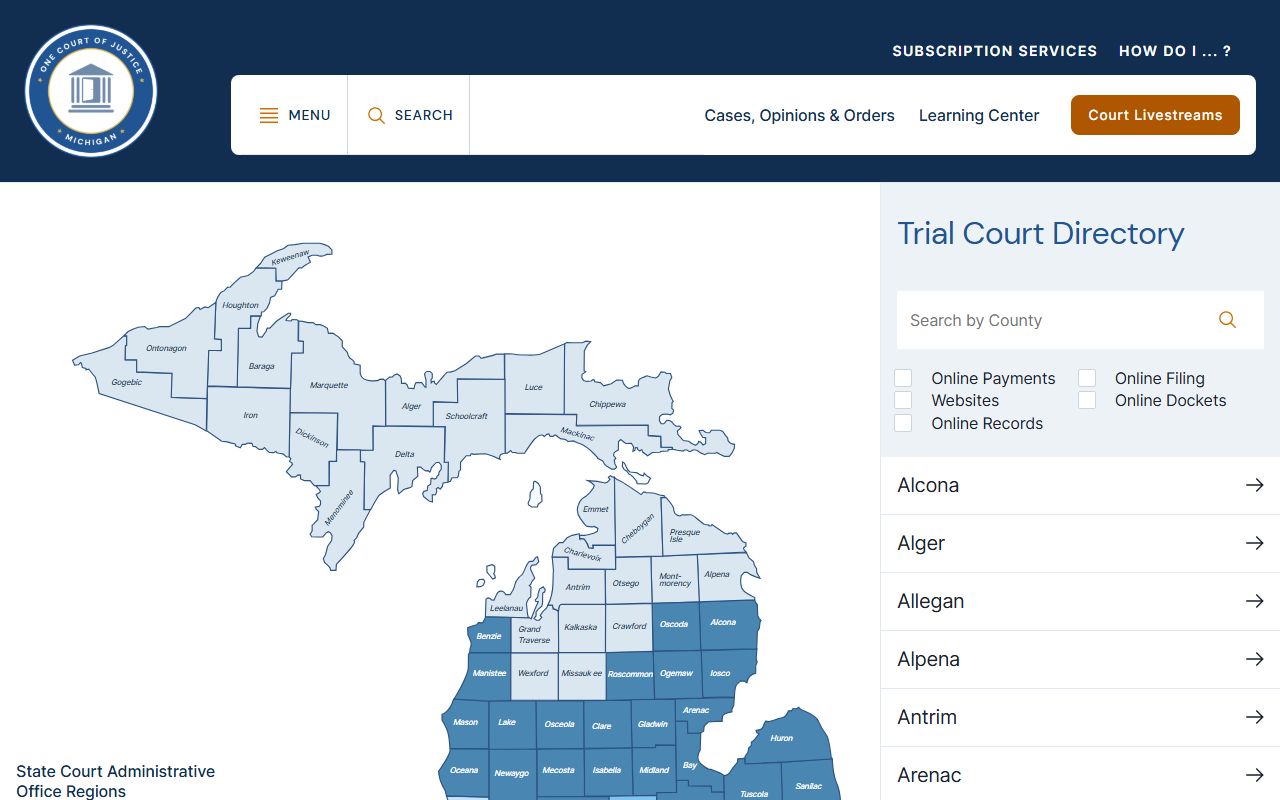
The directory confirms the Isabella County entries and the codes the case search uses for each court.
Courthouse Location and Hours
All three trial courts operate from one address in downtown Mount Pleasant. Court offices open on weekdays and close for state holidays. Visitors pass through security screening before they reach any courtroom or counter, so it helps to arrive with time to spare.
Isabella County Trial Court
300 North Main St.
Mount Pleasant, MI 48858
(989) 772-0911
Fax: (989) 779-8022
Mon-Fri 8:00 a.m. to 4:30 p.m.
The trial court page is the single best entry point for hours, security rules, court calendars, and forms. It links to the case search for each court code and to local administrative orders that shape how records are handled.
Circuit Court vs District Court vs Probate Court
The three courts divide the work by case type and value. The Circuit Court takes the heaviest matters, the District Court handles everyday criminal and smaller civil cases, and the Probate Court manages estates and protective cases. The comparison below sets out the main differences.
| Circuit Court | District Court | Probate Court | |
|---|---|---|---|
| Civil Limit | Over $25,000 | Up to $25,000 (small claims up to $7,000) | Estate value, no set cap |
| Criminal Jurisdiction | Felonies | Misdemeanors, civil infractions, traffic | None |
| Family Cases | Divorce, custody, support | Landlord-tenant, some civil | Guardianship, adoption, name change |
| Appeals | Hears appeals from District Court | Appealed to Circuit Court | Appealed to Circuit Court |
Appeals generally climb one level at a time. A District Court decision is appealed to the Circuit Court, while a Circuit Court decision goes to the Michigan Court of Appeals and, by leave, to the Michigan Supreme Court. The judiciary explains the trial court structure and how the three court types split their duties.
That page mirrors the split Isabella County uses across its circuit, district, and probate divisions.
How a Case Moves Through the System
Most cases follow a predictable path from the first hearing to a possible appeal. Criminal and civil matters start in different courts but can end at the same appellate courts. The flows below trace the common routes.
Criminal flow: District Court arraignment › Preliminary exam › Circuit Court for felonies › Michigan Court of Appeals › Michigan Supreme Court
Civil flow: District Court for claims up to $25,000 › Circuit Court for claims over $25,000 › Michigan Court of Appeals › Michigan Supreme Court
Not every case runs the full length. Many end with a plea, a settlement, or a dismissal well before any appeal.
Civil, Family, and Criminal Divisions
The Circuit Court organizes its work into divisions. The criminal division handles felony cases bound over from the District Court. The civil division hears larger money claims and injunctions. The family division manages divorce, custody, support, and related matters, backed by the Friend of the Court.
The Friend of the Court, reachable at (989) 317-4186, supports family cases with custody and parenting-time recommendations, support enforcement, and mediation. Eligible small claims and landlord-tenant disputes are referred to alternative dispute resolution on the hearing day. These channels keep many cases from needing a full trial.
Common Court Terms
Court records use words that carry a precise meaning. A reader who knows the basic terms can follow a case from filing to judgment. The short glossary below defines the terms that show up most often in a trial court file.
- Arraignment
- The first court appearance, where a defendant hears the charges and a plea is entered.
- Bound over
- The transfer of a felony from the District Court to the Circuit Court for trial after a preliminary exam.
- Disposition
- The outcome of a case, such as a plea, a verdict, a dismissal, or a sentence.
- Bond
- The money or conditions set to release a defendant while a case is pending.
The 21st Judicial Circuit
Isabella County makes up the 21st Judicial Circuit. The Circuit Court here is the general trial court for the county and the destination for felony cases and higher-value civil claims. It also acts as the appellate court for decisions made in the District Court.
The County Clerk serves as clerk of the Circuit Court, assigns case numbers, and keeps the official files. Court filings route to the courthouse on North Main Street, while the clerk's public counter sits a short distance away. The county County Clerk handles certified copies of circuit court records.
The 76th District Court
The 76th District Court is where most residents first meet the court system. It handles misdemeanors, civil infractions, and traffic, and it opens every adult felony with the first appearance. It sets bond, issues warrants, and holds arraignments. Its civil docket covers claims up to $25,000, with a small claims division for disputes up to $7,000.
A district court magistrate handles much of the early criminal work, including warrant review, arraignments, and bond decisions, plus informal small claims and civil infraction hearings. This keeps routine matters moving without a judge for every step.
The state case search offers a 76th District Court search for local misdemeanor, traffic, and small civil cases.
The search returns case numbers, party names, filing dates, and status for district court files.
Filing and E-Filing in the Trial Court
The courts have moved much of their filing online. District Court civil e-filing became mandatory for attorneys on June 12, 2025, which shifted routine civil filings to the state's MiFILE system. Self-represented filers can still file on paper, and the clerk continues to accept mailed and in-person documents.
Michigan's list of available e-filing courts shows which local courts accept electronic filings.
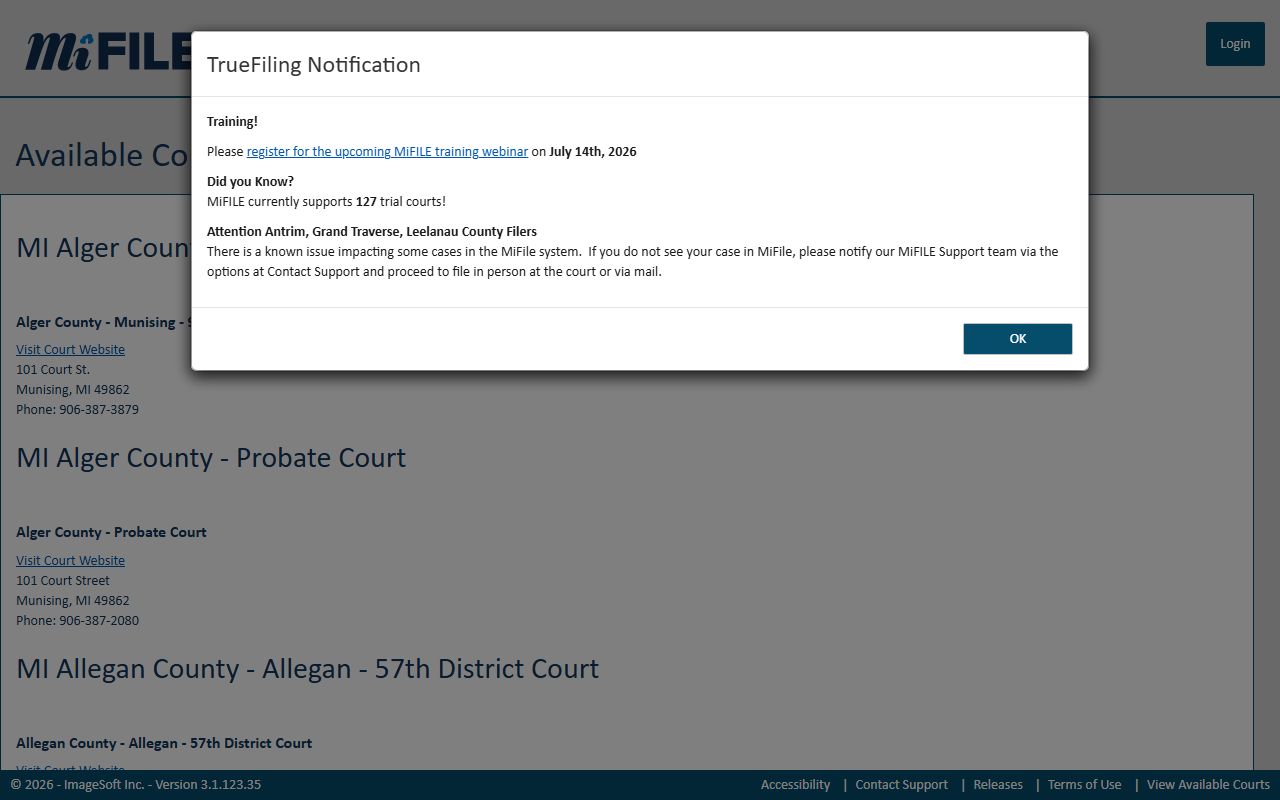
The Isabella County trial courts appear on that list, which confirms where attorneys submit civil filings.
Searching and Restricted Court Records
Public case information for all three courts runs through MiCOURT, the statewide case search. It reaches each court by code and returns case-level details, though full documents usually require a clerk request. Broader county court records guidance covers the search step by step.
Some records stay closed. Juvenile cases, adoptions, and set-aside convictions are restricted by law, and staff redact personal identifiers before release. Michigan's expungement law lets eligible people clear a conviction from public view. The statute at MCL 780.621e sets the eligibility and timing for setting aside a conviction.
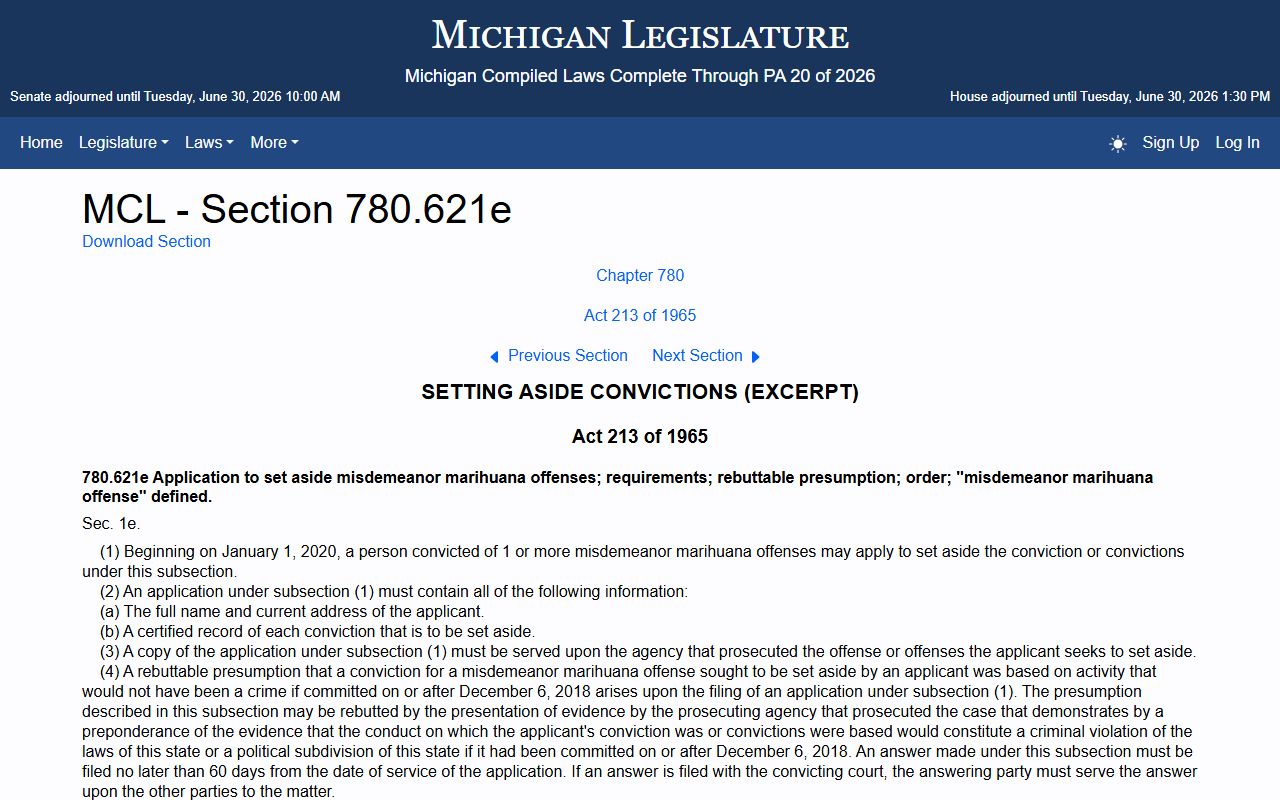
Once a court grants the request, the conviction drops from the public record the trial courts show.
Note: A public search may confirm that a case exists without opening its documents, and sealed or juvenile files require a court order to view.