
The Isabella County Clerk's Office
The County Clerk is an elected official who serves a four-year term. Mindé B. Lux holds the post and runs an office that reaches across courts, records, and elections. As County Clerk she serves as clerk of the Circuit Court, the Family Court, and the county Board of Commissioners. She is also the chief election official and the county Registrar of Vital Records. The office sits in downtown Mount Pleasant and opens to the public on weekdays.
The clerk keeps and issues public records, files court pleadings, records official actions, and collects the fees tied to those services. Birth and death certificates, marriage records, criminal and civil case files, and concealed pistol licenses all pass through the office. Staff also handle notary services and point genealogy researchers toward older records. Each service has its own request path, and some records live in a separate online portal.
Isabella County Clerk
Clerk: Mindé B. Lux
207 North Court St.
Mount Pleasant, MI 48858
(989) 317-4070
mlux@isabellacounty.org
Mon-Fri 8:00 a.m. to 4:30 p.m.
The county publishes a short profile of the clerk and the office on its County Clerk about page.
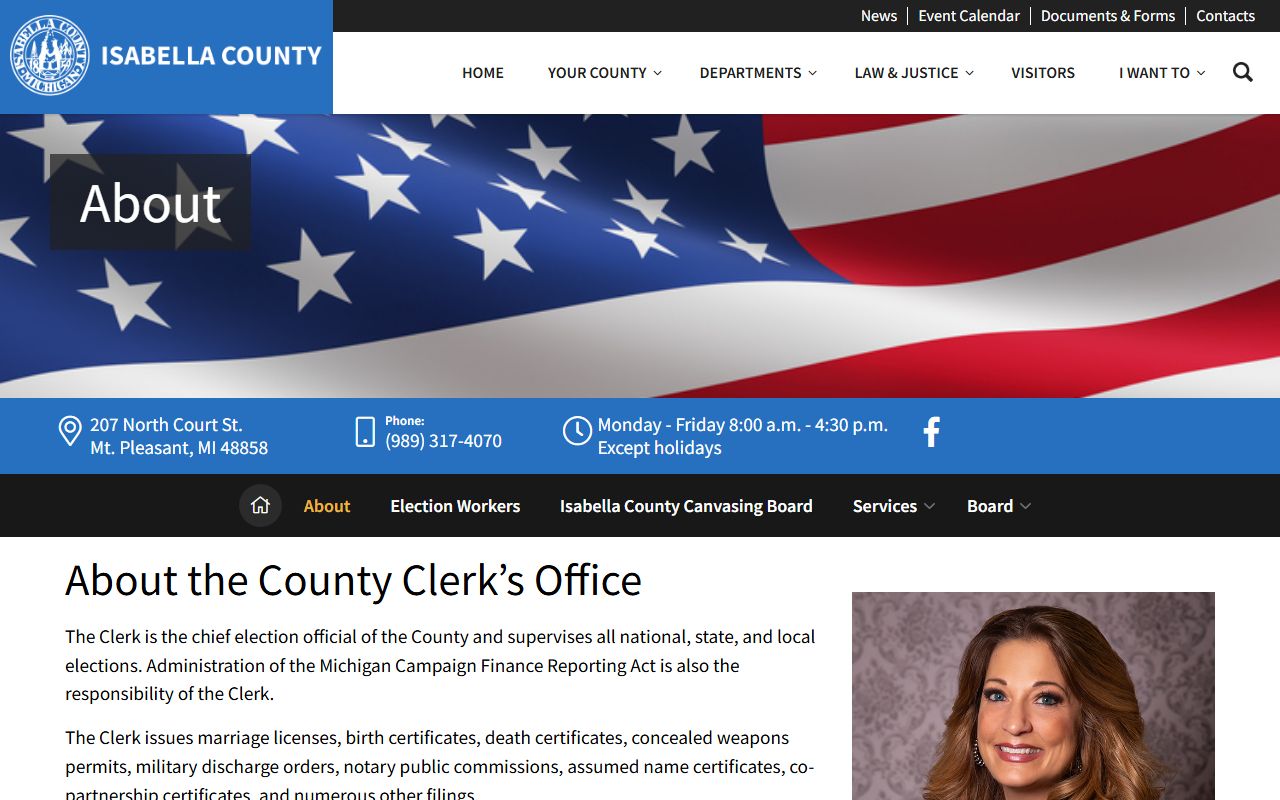
That profile confirms the clerk's elected role and the mix of court, vital record, and election work the office carries.
What the County Clerk Handles
Few county offices touch as many record types as the clerk. The work splits across court support, vital records, licensing, and elections. Some records are open to anyone, while others require identification or a court order. The list below covers the main categories the office manages.
- Birth and death certificates, as the county Registrar of Vital Records
- Marriage records and certified marriage copies
- Criminal and civil case records filed with the Circuit Court
- Concealed pistol license (CPL) applications and processing
- Notary commissions and oaths of office
- Genealogy and historical record access
- Election services, including early voting and voter information
Court filings for the county Circuit Court route through the clerk, who assigns case numbers and keeps the file. Materials meant for a judge are delivered to the courthouse on North Main Street, while general clerk business runs from the Court Street office and a mailing address at 200 North Main Street.
Ways to Reach the County Clerk
The office is built to take requests through more than one channel. Some records are handed over at the counter, some travel by mail, and several move through secure online portals. Picking the right channel for a given record type is the fastest way to a certified copy.
Walk-in visitors reach the office at 207 North Court Street in Mount Pleasant during weekday business hours. Mail requests go to the office mailing address at 200 North Main Street, and must include payment and any required identification. Vital records and marriage copies run through vendor-hosted portals, while phone and email reach staff for general questions and status checks.
When a request could fall under more than one service, the office routes it to the matching endpoint. A birth certificate order, a court file copy, and a concealed pistol application each follow a different form and fee path, even though they start at the same counter.
How to Request a Certified Copy
A certified copy carries the clerk's seal and signature, which courts, agencies, and other states accept as proof. A plain copy works for personal reference but will not satisfy a legal filing. The steps below fit most record types the office issues.
- Decide what you need, whether a vital record, a court file, or a marriage record, since each has its own service path.
- Gather the details that identify the record, such as full names, the event date, and a case number when one exists.
- Download the matching request or application form, or pick one up at the Court Street office.
- Submit the form in person or by mail with the correct fee and any required identification.
- Collect the certified copy at the counter, or wait for it to arrive by mail.
Records Request Form Fields
Whatever the record, a clean request lists the same core details. The clerk uses those details to find the right file and confirm you may receive it. Missing information is the most common reason a request stalls at the counter.
| Field | Required | Notes |
|---|---|---|
| Requester Name and Contact | Yes | Return address, phone, or email for the copy |
| Record Type | Yes | Vital record, court file, or marriage record |
| Party or Subject Names | Yes | Full legal names tied to the record |
| Event or Filing Date | No | Speeds the search when a case number is unknown |
| Case Number | No | Required for a specific court file when known |
| Number of Copies | Yes | Sets the total fee due |
| Valid Photo ID | Varies | Required for birth certificates and some restricted records |
Isabella County Clerk Copy Fees
The office publishes a set fee for certified marriage copies. Other copy fees, such as court file or vital record copies, are set by the office and the court and confirmed when you ask. Always verify the current amount before you mail a payment.
| Item | Amount |
|---|---|
| First certified marriage copy | $20.00 |
| Each additional copy in the same transaction | $10.00 |
| Court file and vital record copies | Confirmed by the office on request |
Marriage record payments can run through the county GovPros payment portal, and the full application flow appears on the county marriage and divorce records page.
Important: Certified copies are required for legal proceedings. An uncertified printout from an online search is not accepted in court.
Election and Vital Record Duties
Beyond the record counter, the clerk runs the machinery of county elections. As chief election official she oversees early voting, ballots, and voter information, and she serves on several election boards. As Registrar of Vital Records she certifies the birth and death records filed in the county.
These duties explain why the office holds so many identity documents. A single visit might mix a voter question, a birth certificate order, and a notary oath at the same counter.
Sealing and Expunging Court Records
Some records that once appeared in a case file can later be set aside. Michigan's expungement law lets eligible people ask a court to seal a conviction, which then drops from public view. The clerk processes the paperwork and updates the file when a court grants the request.
The state statute at MCL 780.621f spells out the treatment of set-aside convictions.
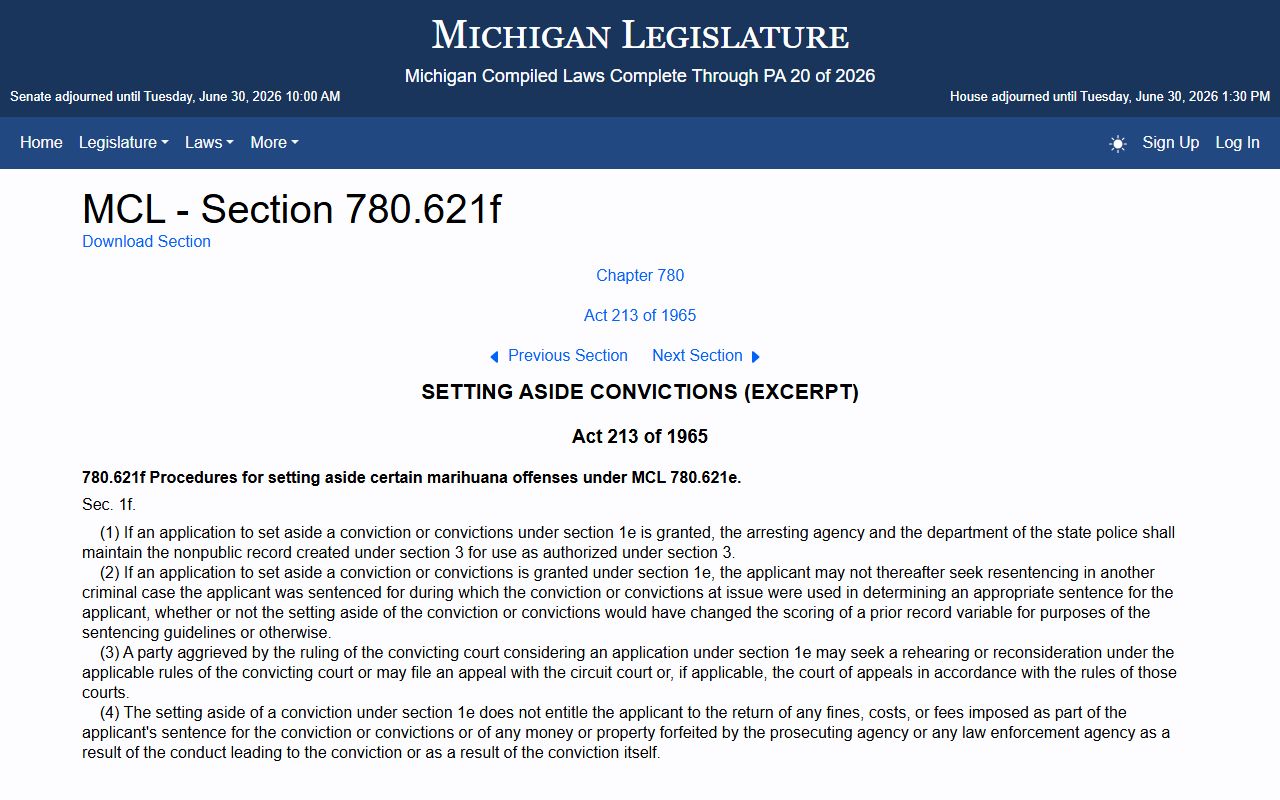
It shows how a granted application changes what the public record can display for that person.
A related section covers the court order and the record itself, found at MCL 780.621g.
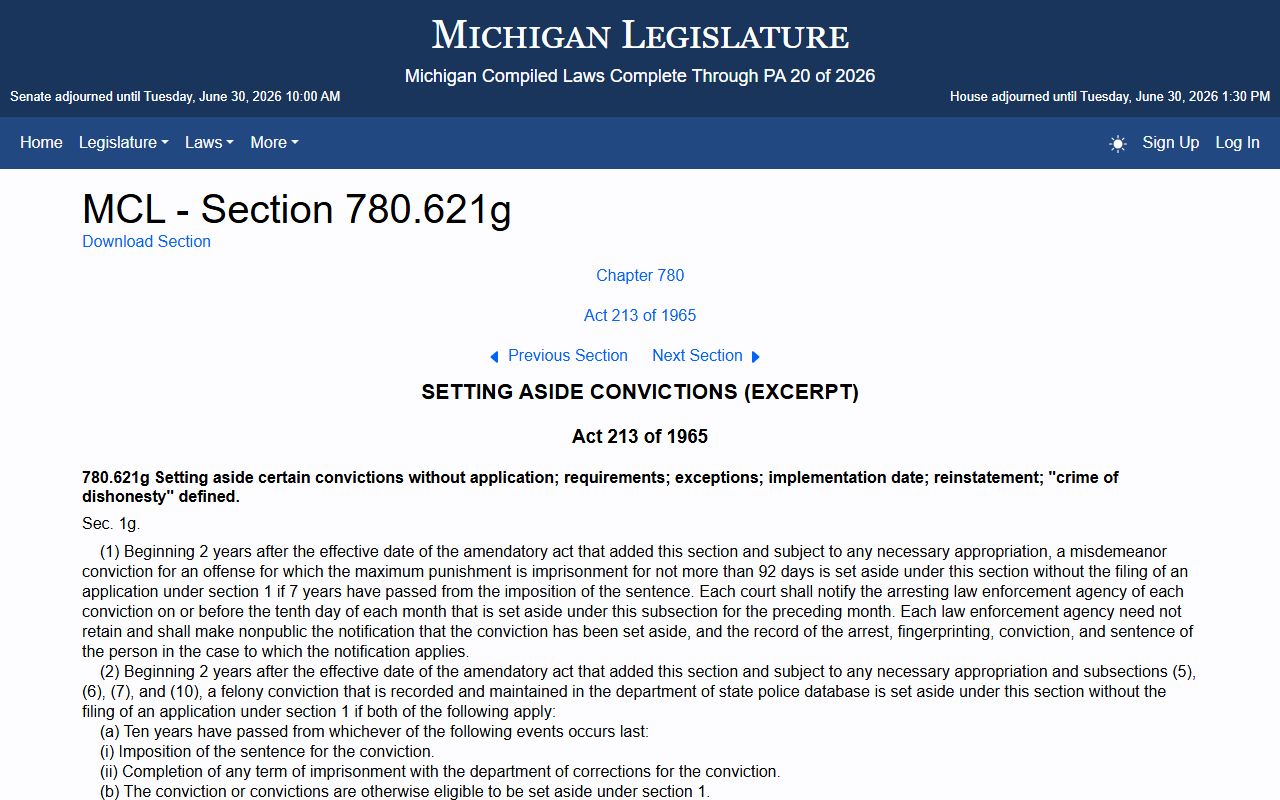
Once sealed, the file leaves public search and the clerk keeps a restricted copy under the court order.
Juvenile and Confidential Records
Not every file the clerk holds is open. Juvenile cases, adoptions, and some family matters carry confidentiality by law, and staff redact personal identifiers before release. A public search may show that a case exists without opening its contents.
Michigan's juvenile code at MCL 712A.28 governs how juvenile records are kept and who may see them.
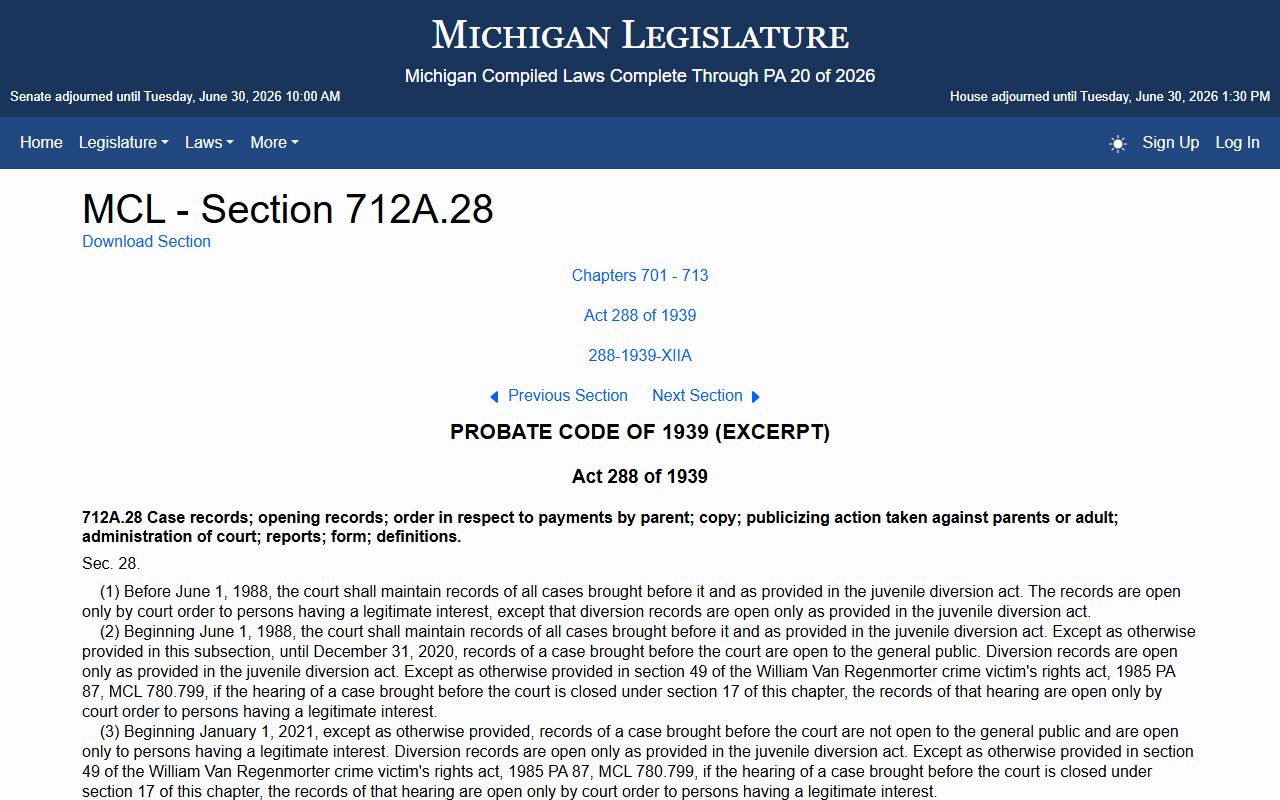
The rule limits access to protect minors, so most juvenile files require a court order to view.
Note: Public status does not guarantee full disclosure, and sealed, juvenile, and adoption records stay closed unless a judge allows access.
Terms Used at the Clerk's Counter
A few words come up often when people request records, and knowing them helps a request move cleanly. The office deals in seals, certifications, and filing dates every day. The short glossary below covers the terms most likely to appear on a form or a fee sheet.
- Certified copy
- A copy stamped with the clerk's seal and signature that an agency or court will accept as an official record.
- Registrar of Vital Records
- The clerk's role as the county keeper of birth and death records filed locally.
- Notary commission
- The state authority to witness signatures, filed and recorded through the clerk's office.
- Set-aside conviction
- A conviction a court has sealed under Michigan's expungement law, which then leaves public view.
Mail and Online Request Options
Many requests never require a trip downtown. The clerk accepts mailed forms with payment, and several services run through secure online portals. General questions still reach staff by phone or email during business hours.
District Court civil e-filing became mandatory for attorneys on June 12, 2025, which pushed more routine filings online. Vital records can be ordered through the county online vital records portal, while marriage and concealed pistol payments run through the GovPros system. Court case details, meanwhile, are searched through the statewide MiCOURT case search.