
No Public Warrant List in Isabella County
Start with a plain fact. No official Isabella County source publishes an open, searchable list of active warrants. The Isabella County Sheriff's Office posts contact and service pages, but no direct warrant-search page surfaced in a review of official county content. There is also no county e-warrant portal that lets the public type in a name and pull a warrant. That gap shapes the whole process.
Because there is no database, checking a warrant here is a channel task. You confirm through the office that holds the record, then verify its status. Most warrants tie to a court case, so the court clerk is the anchor. A warrant already worked by deputies ties to the Sheriff. When you know which office to call, you get a real answer instead of a dead-end search box.
Anyone can still gather solid information. The court's own case system shows criminal and civil filings, and a bench warrant usually rides on an existing case. The Sheriff's jail line can speak to active custody holds. A formal records request covers the rest. The point is to treat the search as a set of phone calls and requests, not a single lookup.
How to Confirm an Isabella County Warrant
The most reliable path starts at the court clerk and moves outward. A bench warrant almost always sits inside a court file, so the clerk can tell you whether one exists and what case it belongs to. From there you confirm the status and reach the Sheriff if a live hold is in play. Work the steps in order.
- Confirm the warrant and its case number through the court clerk first. The Isabella County Clerk is clerk of the Circuit and Family courts and can point you to the file.
- Ask the clerk whether the warrant is active, already paid, or stale. An old entry that was resolved should not still be treated as live.
- Search the statewide case system to line up the case details. The MiCOURT case search covers the 76th District and 21st Circuit courts by name or case number.
- Call the Sheriff's Office with the case identifier in hand. A named case number gets you a faster, cleaner answer than a cold name check.
- Ask about a municipal or community-court path if the matter looks local rather than county-wide.
- File a formal records request for a sealed, disputed, or missing entry, and seek legal counsel if an arrest looks near.
Keep notes on names, dates, and case numbers as you go. Each office may hold a different slice of the record, and a clean set of identifiers keeps the calls short.
Records Requests and Clerk Channels
When a phone call does not settle the question, a formal request often will. The County Clerk handles certified copies and record requests through official channels, and several of those channels run through online portals. These portals are request tools, not warrant-search tools, but they show how the clerk accepts documents and payments for the records it keeps.
The clerk uses a secure payment portal for many record requests. You can see the clerk's online request and payment flow on the GovPros clerk portal, which is where certified-copy fees are paid.
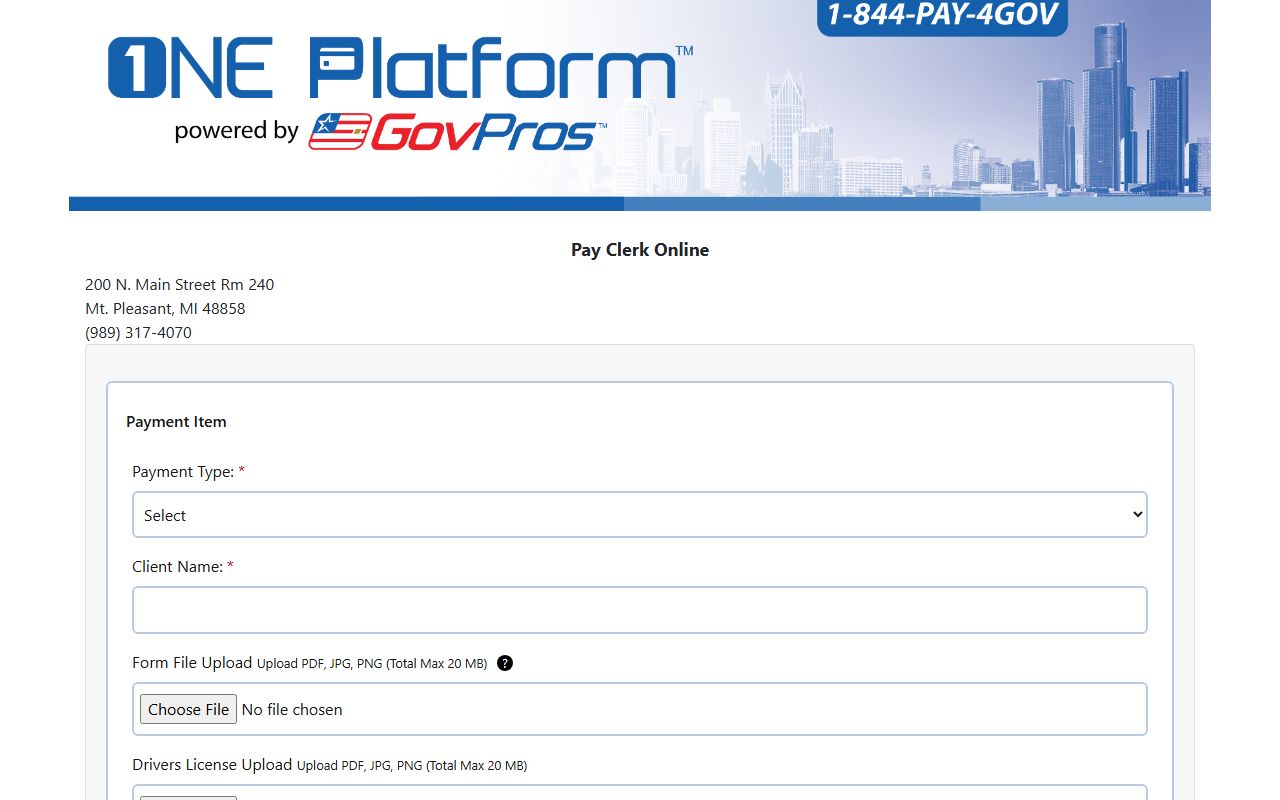
The same style of request flow applies when you need a certified court document to resolve a warrant question. Vital records follow a parallel path through a separate portal.
Birth, death, and marriage certificates route through the county's vital-records vendor. The Isabella County vital records portal lets you search and order those certified copies online.
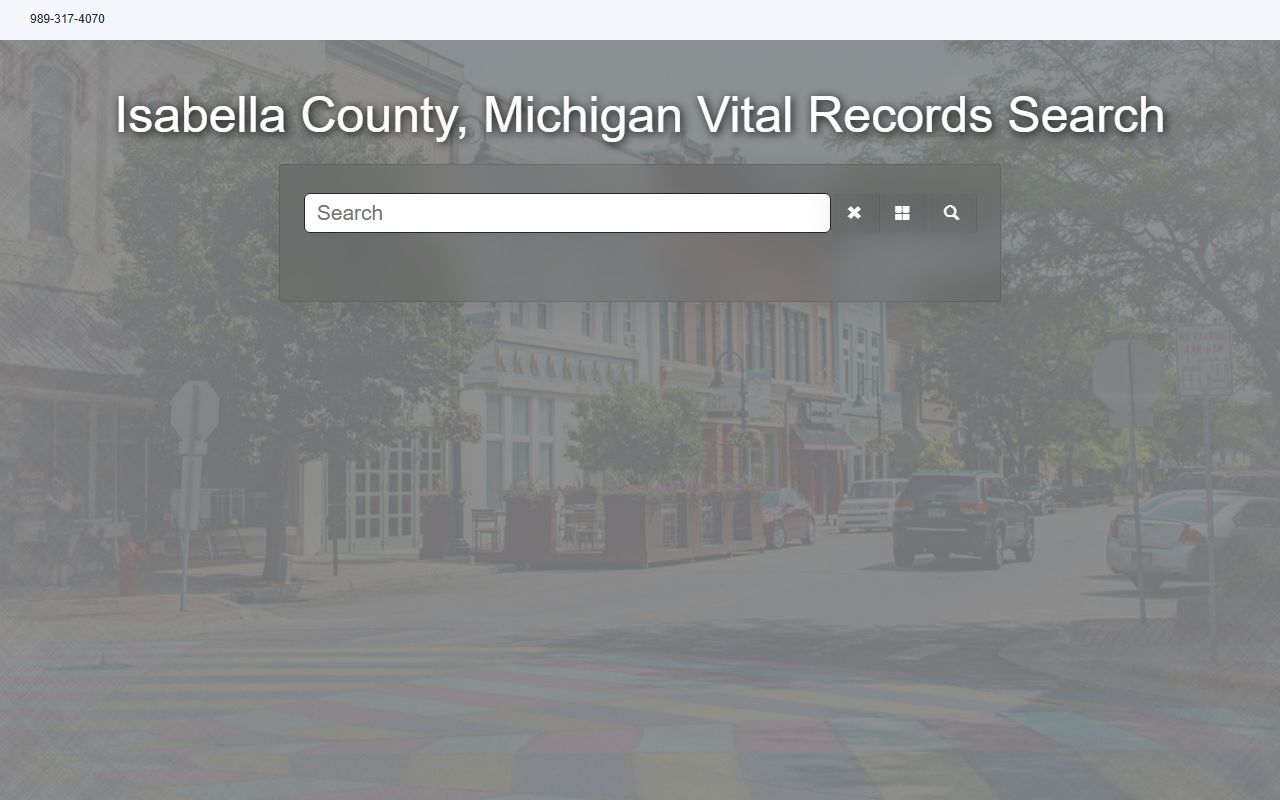
A certified record from this portal can back up an identity or resolve a mismatch when a warrant names the wrong person. Other clerk services use the same vendor system.
The concealed-pistol-license process runs through the clerk as well, on the same vendor platform. You can view the concealed weapon application portal to see how the clerk accepts and tracks those applications.
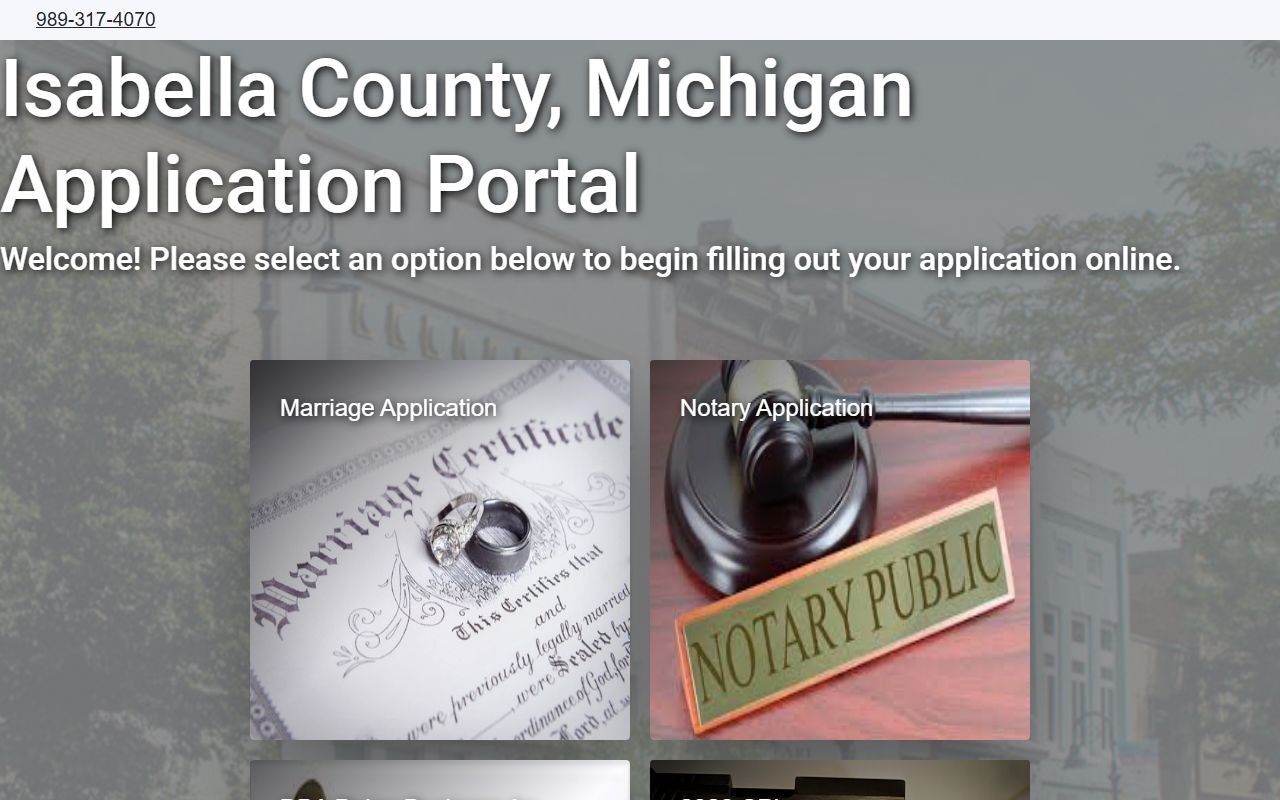
These portals matter for warrants only as a model of how the clerk works. They confirm the office you contact, the payment method it uses, and the fact that requests are handled through official county channels, not third-party sites.
What a Warrant Record Contains
Even without a public list, it helps to know what a warrant record holds. When the clerk or the Sheriff reads one to you, these are the fields that usually appear. Knowing them makes the call shorter and helps you confirm you are looking at the right person and the right case.
| Field | What It Shows |
|---|---|
| Warrant Number | The unique identifier assigned when the warrant is issued. |
| Issue Date | The date a judge or magistrate signed the warrant. |
| Charge | The offense or the missed obligation the warrant is tied to. |
| Bond Amount | The amount set for release, when a bond has been fixed. |
| Issuing Court | Whether the 76th District or 21st Circuit court issued it. |
Not every field is open to every caller. Some details are held back for safety or because a case is sealed, so a clerk may confirm a warrant exists without reading out every line.
Bench Warrants and Court Responsibility
Most warrants a resident runs into are bench warrants. A judge issues one when a person misses a court date, skips a payment, or ignores a court order. In Isabella County, that judge usually sits on the 76th District Court, which handles misdemeanors, traffic, and arraignments, or the 21st Circuit Court, which handles felonies and larger civil and family matters. Because the warrant lives inside a court case, the court, not the Sheriff alone, controls how it clears.
That court link is why the clerk is the first call. A bench warrant can stay open for years while tied to old proceedings, so a stale entry may still show as active until the case is addressed. Clearing it often means appearing before the same court, paying what is owed, or asking the judge to recall the warrant. Law-enforcement and court coordination is common, and counsel is often needed to sort out an old bond or a misunderstanding.
Types of Warrants in Isabella County
Warrants come in a few forms, and each is handled a little differently. Knowing which type you are dealing with tells you which office to call and what resolving it will involve.
- Arrest warrant - Issued on probable cause that a person committed a crime, authorizing law enforcement to take them into custody.
- Bench warrant - Ordered by a judge when someone misses a hearing, a payment, or a court directive tied to an open case.
- Search warrant - Authorizes officers to search a place or thing for evidence, and is not a warrant for a person's arrest.
- Capias or failure-to-appear - Directs the arrest of a person who did not appear as required, often to bring them before the court.
What to Do If You Have a Warrant
If you believe a warrant is out in your name, act on it rather than wait. An unresolved warrant can lead to arrest during a traffic stop or any routine contact with police. The safest first move is to confirm the warrant and its terms through the clerk, then talk to a lawyer before you take any next step. Counsel can arrange a surrender on your terms, address bond, and reduce the chance of a surprise arrest.
Bond is often part of clearing a warrant. If a bond is set, a licensed bail-bond agent can post it. The county maintains a bail bond agency directory through the trial court so you can find an approved agent.
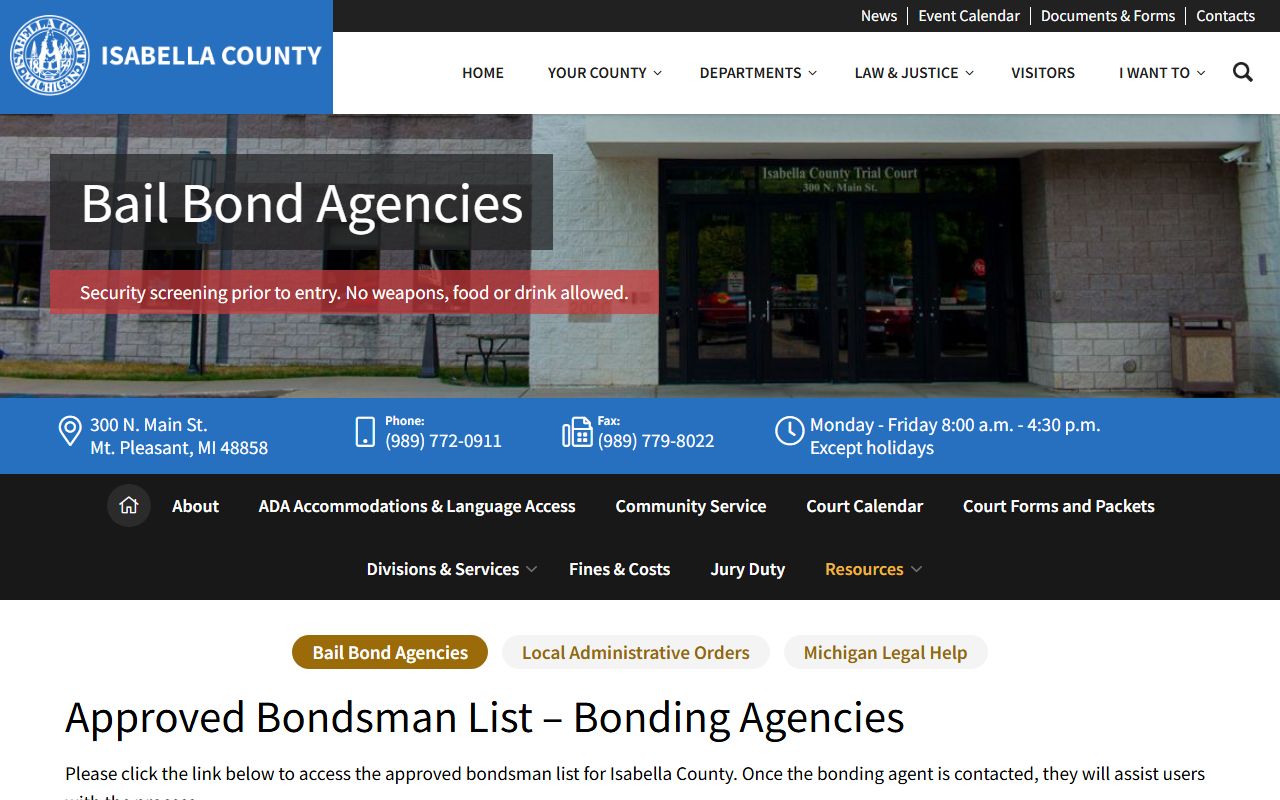
Using an approved agent from the county directory keeps the bond process clean and recognized by the court. If you cannot afford a private attorney, you may qualify for representation.
The Isabella County Sheriff's Office, at 5270 East Remus Road, is the office to call about an active hold. Its main line is (989) 772-5911, and jail information runs through (989) 772-5915. Established in 2019, the Isabella County Public Defender's Office represents qualifying defendants and can be reached at (989) 317-9393. The full case file and sentencing detail live in the Isabella County criminal court records, which is worth reviewing before any court date.
Important: Talk to a lawyer before you turn yourself in on any warrant, so surrender, bond, and timing are handled in a way that protects your rights.
When a Custody Search Shows a Warrant Flag
One place a warrant or hold sometimes surfaces online is the jail's custody roster. If a person is already booked, the Sheriff's public roster may show a hold or a pending charge. It is not a warrant database, but it is the closest online tool where a flag can appear. Use it as a check, not a substitute for calling the clerk.
The Sheriff runs an online inmate lookup through a public roster app. You can open the Isabella County inmate search portal to see who is currently in custody.
If a booking shows a hold, follow up with the jail to learn which court set it. Full booking detail and the roster walkthrough live on the Isabella County inmate records page.
Restricted Isabella County Warrant Records
Not every warrant is open to public view. Sealed warrants, warrants tied to active or covert investigations, and juvenile matters are held back by policy. Michigan practice also calls for redaction of personal identifiers, so even a confirmed record may come with details withheld. A clerk can acknowledge a warrant exists while declining to read out protected fields.
Federal warrants sit outside county channels entirely. Those run through federal courts and agencies, not the Sheriff or the county clerk. Family-support and juvenile files carry their own confidentiality, and access may require party or attorney authorization. When a search comes back empty or partial, the right next step is a records request through the proper office rather than a third-party site.
Note: When no official source lists a warrant, treat that as a reason to call the clerk and Sheriff, not as proof that no warrant exists.