
Isabella County Arrest Records and Court Charges
An arrest record is the account of an arrest itself: who was taken in, by which agency, and when they were booked. In Isabella County the Sheriff's Office, led by Sheriff Michael Main, handles booking at the county jail. An arrest, on its own, is not a charge. After booking, the Prosecuting Attorney, Mark Kowalczyk, reviews the facts and decides which formal charges to bring. Those charges are filed with the court, and the clerk opens a case file to hold them.
The two records live in different places. The arrest and booking detail sits on the custody side, which is why the county jail roster is where you confirm who is held and on what booking. That booking view appears in the Isabella County inmate records. The court charges after arrest, by contrast, are tracked through the case, and the outcome and sentence sit in the criminal court records. These records trace the arrest-to-charges pathway, not a mugshot gallery.
How to Find Isabella County Arrest Records and Charges
Filed charges show up in the court case index, not on a separate arrest-only page. The main tool is MiCOURT, the Michigan judiciary case search, which reaches the 76th District Court and the 21st Circuit Court by code. It returns the case number, party names, charge list, and status. Booking and custody detail, by contrast, comes from the county jail roster, so many searches use both tools side by side.
- Open the MiCOURT case search and accept the terms.
- Search by defendant name, or enter a case number if you have one.
- Open the matching case and read the full charge list.
- Check each charge's statute code, severity level, and current status.
Charges can also roll up into statewide systems. The Michigan Department of Corrections runs the OTIS offender search, which shows people in prison, on parole, or on probation.
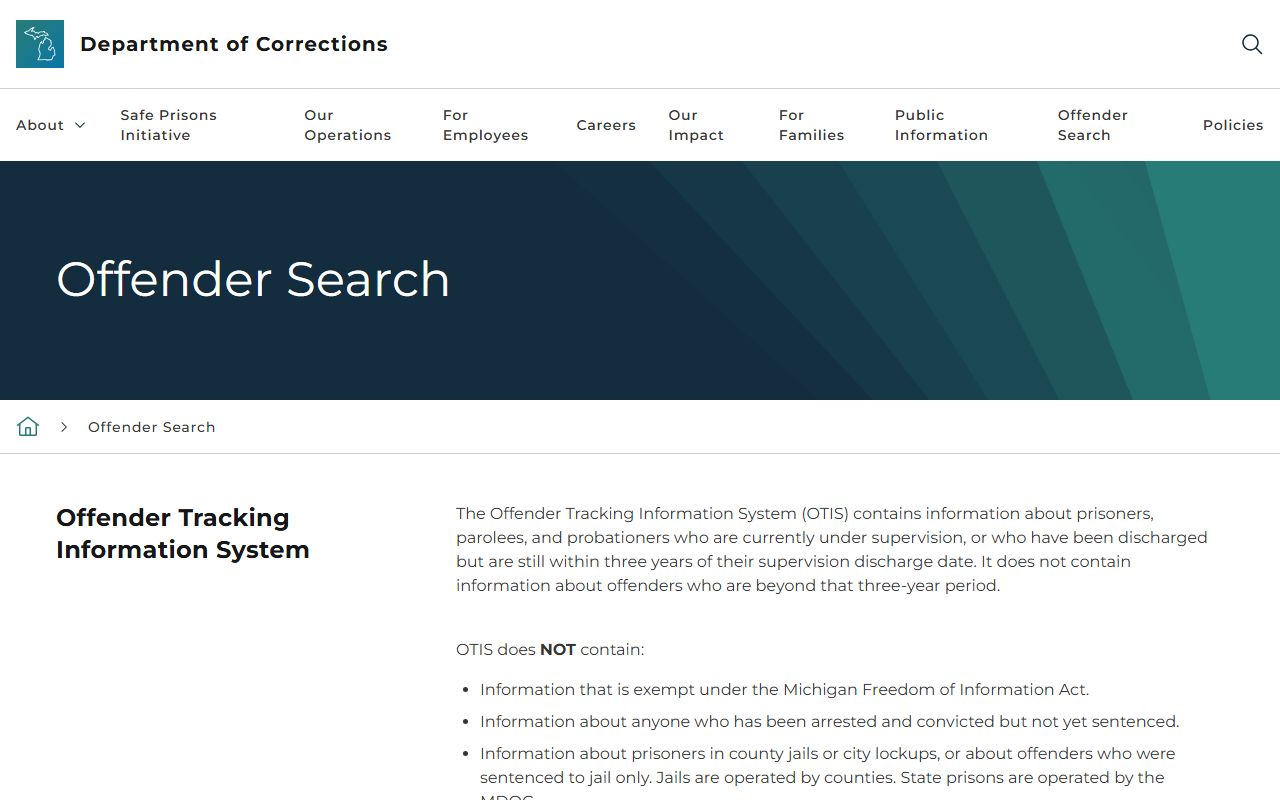
OTIS confirms a supervision status statewide, which helps when a local case has already moved to sentencing.
How Charges Get Filed After an Arrest
The charge record begins with a charging document. The arrest happens at booking, then the prosecutor turns the police report into formal counts by filing one of three documents. A complaint often opens a misdemeanor and many felony cases in District Court. An information carries a felony forward once the case is bound over. An indictment comes from a grand jury and is used for the most serious matters. Each one starts the case and sets the counts the court will hear.
| Complaint | Information | Indictment | |
|---|---|---|---|
| Filed By | Officer / Prosecutor | Prosecutor | Grand Jury |
| Common For | Misdemeanors | Many felonies | Serious felonies |
| Starts | The case | The case | The case |
Charge Status and What It Means
Charges rarely stay fixed. As a case moves, a count can be amended, reduced, added, dropped, or dismissed. The status line in the record tells you where each charge stands right now. A person can be arrested on one offense and end up charged with another, or with none at all. Reading the current status, and not just the first charge listed, keeps the record from being misread.
| Status | What It Means |
|---|---|
| Pending | The charge is filed and open, with no final ruling yet. |
| Amended / Reduced | The prosecutor changed the count, often to a lesser offense. |
| Dismissed | The court dropped the charge, and it will not move forward. |
| Nolle Prosequi | The prosecutor formally chose not to pursue the charge. |
Note: A dropped or dismissed charge can still show in the case index until the file is sealed or the conviction is set aside.
Charges vs. Convictions
A charge is an accusation, not a finding of guilt. Being charged only means the prosecutor believes there is enough cause to take the case forward. A conviction comes later, and only if a plea or a verdict proves the count beyond a reasonable doubt. Many arrest and charge records end without a conviction on the original count. The comparison below sums up the difference at a glance.
| Charge | Conviction | |
|---|---|---|
| Stage | Accusation | Verdict or plea |
| Burden of Proof | Probable cause | Beyond reasonable doubt |
| Public Record | Yes | Yes |
Sealed vs. Expunged Records
Charge records do not always stay public. Two paths limit access. A sealed file remains in existence but is kept from routine public view, while some agencies keep a way in. An expunged, or set aside, record is treated as though the charge never occurred, and the public entry is removed. Michigan controls set-aside relief by statute, with waiting periods that turn on the offense and the person's history.
| Sealed | Expunged | |
|---|---|---|
| Visibility | Hidden from public | Set aside and treated as never existed |
| Law Enforcement | Limited access | Very limited |
| Eligibility | By court order in protected cases | Set by Michigan expungement law and waiting periods |
The adult set-aside rules appear in the Michigan expungement statute, which controls when a charge or conviction can be cleared.
Charge Codes and Severity Levels
Each charge is tied to a specific statute, and the record lists that code next to the count. Michigan sorts offenses by weight. A felony carries the highest penalty and is heard in the 21st Circuit Court after it is bound over. A misdemeanor is lighter and stays in the 76th District Court. A civil infraction, such as most traffic matters, is not a crime at all. One arrest can produce several separate charges at once, and each carries its own code, level, and status. That is why a single case may list a felony count beside a lesser misdemeanor.
Statewide Charge and Criminal History Lookups
Some charges lead to statewide records that reach beyond a single county case. Michigan runs a public sex offender registry through the State Police, searchable by name or area. It lists people required to register after certain convictions. This is not a general charge index, and it does not show pending counts, but it is a key statewide lookup tied to specific offenses.
The State Police host the public Michigan sex offender registry with statewide coverage.
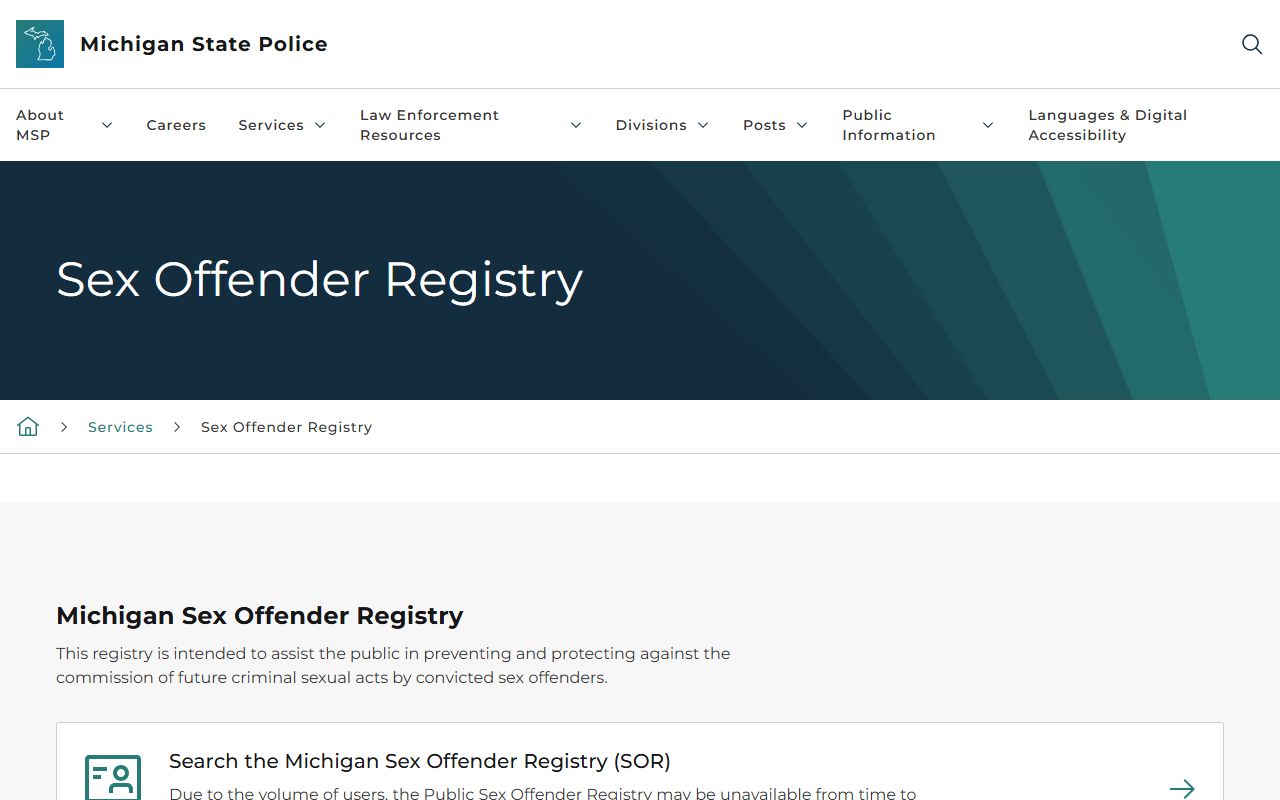
The registry pulls from convictions statewide, so it fills a gap that a local charge search alone cannot.
Following Charges and Custody Status
Once charges are filed, victims and the public can track custody and case changes without calling the jail each day. Michigan offers MI-VINE, a free notification service that alerts registered users when an offender's custody status changes. It ties the arrest and charge side together, since a release, transfer, or hearing can matter to the people a case affects.
The Department of Corrections describes the MI-VINE victim alert program and how to sign up.
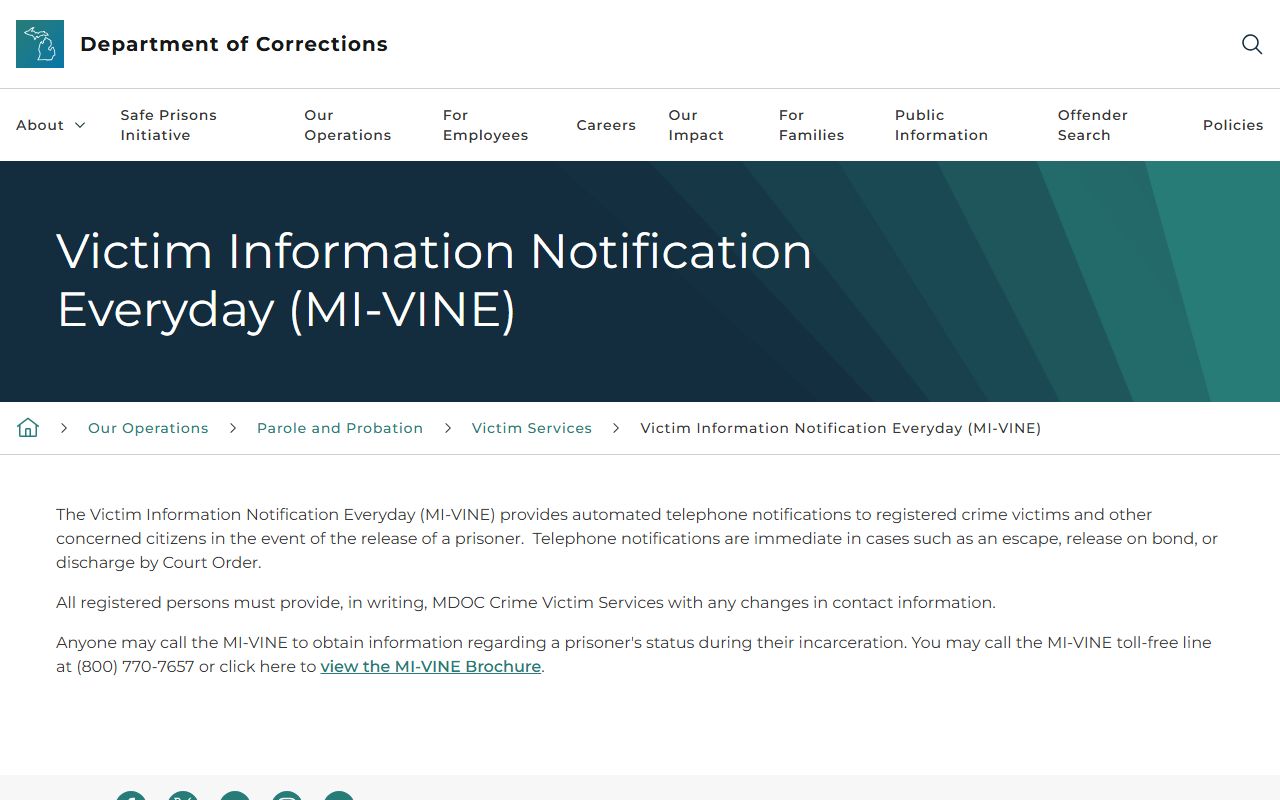
Registration lets a user pick phone, email, or text alerts for a named person in custody.
The state also runs a shared MI-VINE landing page through its health department for broader victim guidance.

That shared MI-VINE page points crime victims to alerts and support after charges are filed.
Background Check Considerations
Looking up arrest records and charges for personal reference is not a formal background check. Public court tools show charge data, but they were not built to screen a job or lease applicant. Those uses fall under the federal Fair Credit Reporting Act, which sets accuracy and consent rules. A dropped or amended charge that lingers in an index can mislead, so any official decision should rest on a certified record and a licensed screening firm.
Important: Public arrest and charge records may not be used to decide credit, employment, housing, or insurance, and a licensed screening firm must run any formal background check under the FCRA.
What to Do After Isabella County Charges Are Filed
Seeing a charge on the record is not the end of the road. A charged person has the right to counsel, and that right attaches early. The Isabella County Public Defender's Office, opened in 2019, represents qualifying defendants starting at arraignment. If a case moves past that first hearing, the court can appoint continued counsel for anyone who meets the income test. A person unsure about a charge should talk with a lawyer before making statements about the case.
Isabella County Public Defender's Office
2885 Health Parkway
Mount Pleasant, MI 48858
(989) 317-9393
Mon–Fri 8:00 a.m.–4:30 p.m.
When a charge is missing, unclear, or looks wrong, the next step is the court itself. The County Clerk can confirm what the case file holds and how to request a certified copy, and the Prosecuting Attorney's office answers questions about why a specific count was filed. A written records request keeps a paper trail when a charge is restricted or held off the public index.
Restricted Charge Records in Isabella County
Not every charge is open to the public. Juvenile matters carry strong protection under the Michigan juvenile code, MCL 712A.28, which keeps most youth charges out of public search. Sealed and set-aside cases drop from the public index by court order. Charges tied to an open investigation, or a warrant not yet served, may be withheld until served. When a charge is missing online, a written request to the County Clerk is the next step, since the clerk can confirm whether it exists, is restricted, or must be read in person.