
What Is a Court Docket in Isabella County
A docket is the official index of events in a single case. Each line marks something that happened: a filing, a motion, a hearing, or a ruling. Read top to bottom, a docket tells the story of a case in order. In Isabella County, the trial courts keep a docket for every matter they open, from a traffic citation to a felony trial. The docket points to the underlying documents, but it is not the documents themselves.
The word docket also describes a court's calendar of upcoming hearings for a given day or judge. Both meanings matter here. One is the event log for a specific case, and the other is the schedule of cases set to be heard. A case docket and the courtroom calendar work together, since the next hearing on a case docket is what places that case on the daily calendar.
Dockets differ by court. A 76th District Court docket for a misdemeanor moves quickly through arraignment and pretrial steps. A 21st Circuit Court docket for a felony or a larger civil claim runs longer and holds more entries. A 37th Probate Court docket tracks estate and guardianship actions on its own timeline.
People check a docket for practical reasons. A defendant wants to confirm the next court date. A landlord follows an eviction case. A reporter tracks a public matter. An attorney watches for a new filing from the other side. In each case, the docket answers the question quickly without a trip to the courthouse. The online view stays current with what the clerk has entered, so it is the fastest way to see where a case stands today.
How to Find Isabella County Dockets Online
The docket search starts at Michigan's statewide case search, known as MiCOURT. It is a single front door for the whole state, and it routes to each Isabella County court by code. The 21st Circuit Court is C21, the 76th District Court is D76, and the 37th Probate Court is P37. The portal returns docket-level metadata, meaning the case status and schedule rather than full document images.
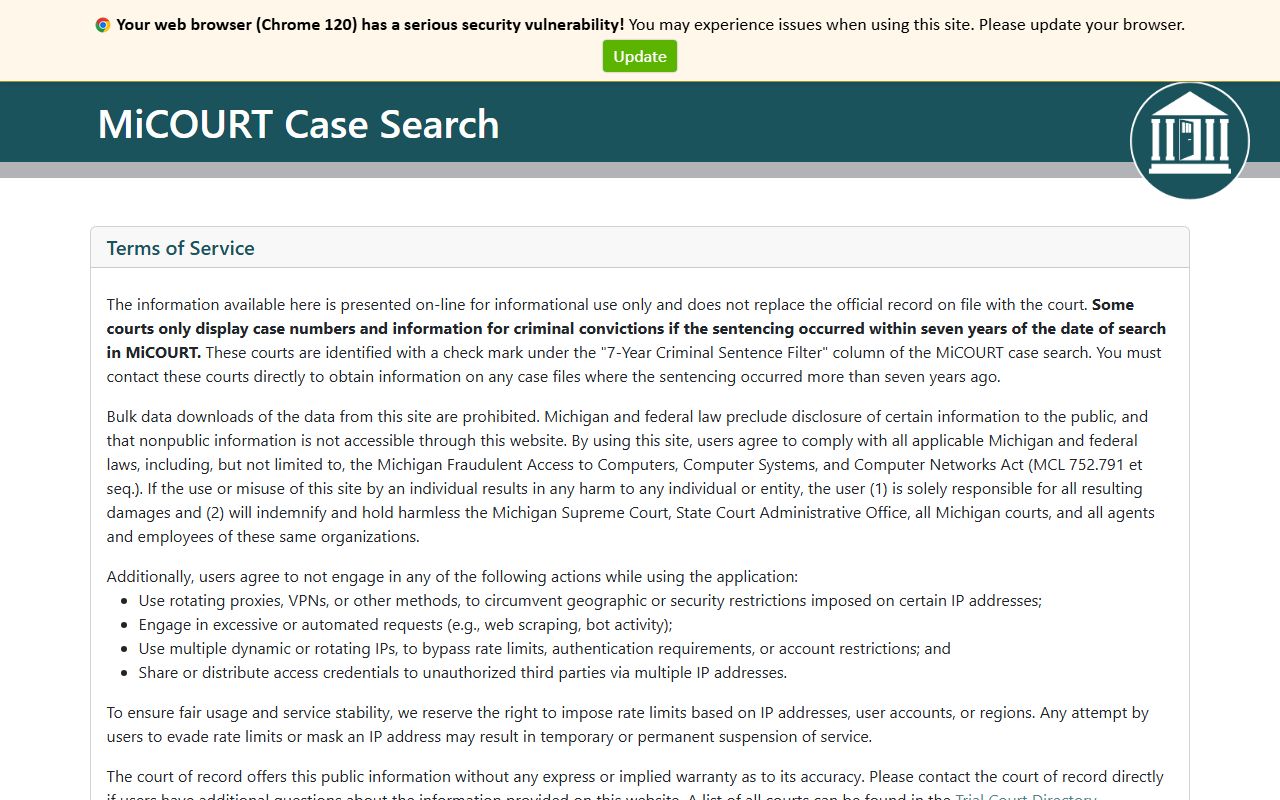
From that landing page, a few steps get you to a specific docket. Have a party name or a case number ready before you begin.
- Open the MiCOURT case search and accept the terms of use notice.
- Select the Isabella County court that fits the case: Circuit (C21), District (D76), or Probate (P37).
- Enter a last name and first name, or switch to case number mode and type the case number.
- Review the matching rows for the case status, filed date, and next hearing.
When a case does not appear online, the County Clerk can pull the docket at the counter, and the same office answers phone requests for case status. The clerk serves as the standing fallback whenever the portal comes up short. Old cases, partial seals, and recent filings are the usual reasons a docket lags behind the paper file. A quick phone call often confirms a case number, a hearing date, or a status that the public search does not surface.
Sample Isabella County Docket Entry
A docket search row packs several fields into one line. Each field answers a different question: which case, whose case, when it opened, where it stands, and what comes next. The table maps the fields returned by a MiCOURT result row for an Isabella County case.
| Field | What It Shows |
|---|---|
| Case Number | The unique identifier the court assigned to the case |
| Case Title | The parties in the case, such as the state versus a defendant |
| Filed Date | The date the case opened on the docket |
| Case Status | Whether the case is open, pending, adjudicated, or closed |
| Next Hearing | The next scheduled court date, when one is set |
| Party Type | The role of the named person, such as defendant or petitioner |
Document links and full order images do not show at this list level. To read a motion or an order in full, request the file from the clerk or view it in person at the courthouse.
Courts That Publish Dockets in Isabella County
Three trial courts share the Isabella County Trial Court complex, and each posts case dockets through MiCOURT under its own code. The portal decides which cases appear based on court behavior and case type, so sensitive categories may stay off the public list. A configuration feed behind the search defines that behavior for every court.
- 21st Circuit Court (C21) publishes dockets for felonies, higher-value civil claims, and family matters.
- 76th District Court (D76) publishes dockets for misdemeanors, civil infractions, traffic, and small claims.
- 37th Probate Court (P37) publishes dockets for estates, guardianships, and conservatorships, with adoption and mental-health files restricted.
The search tool loads its court rules from a MiCOURT configuration file that lists how each court behaves.
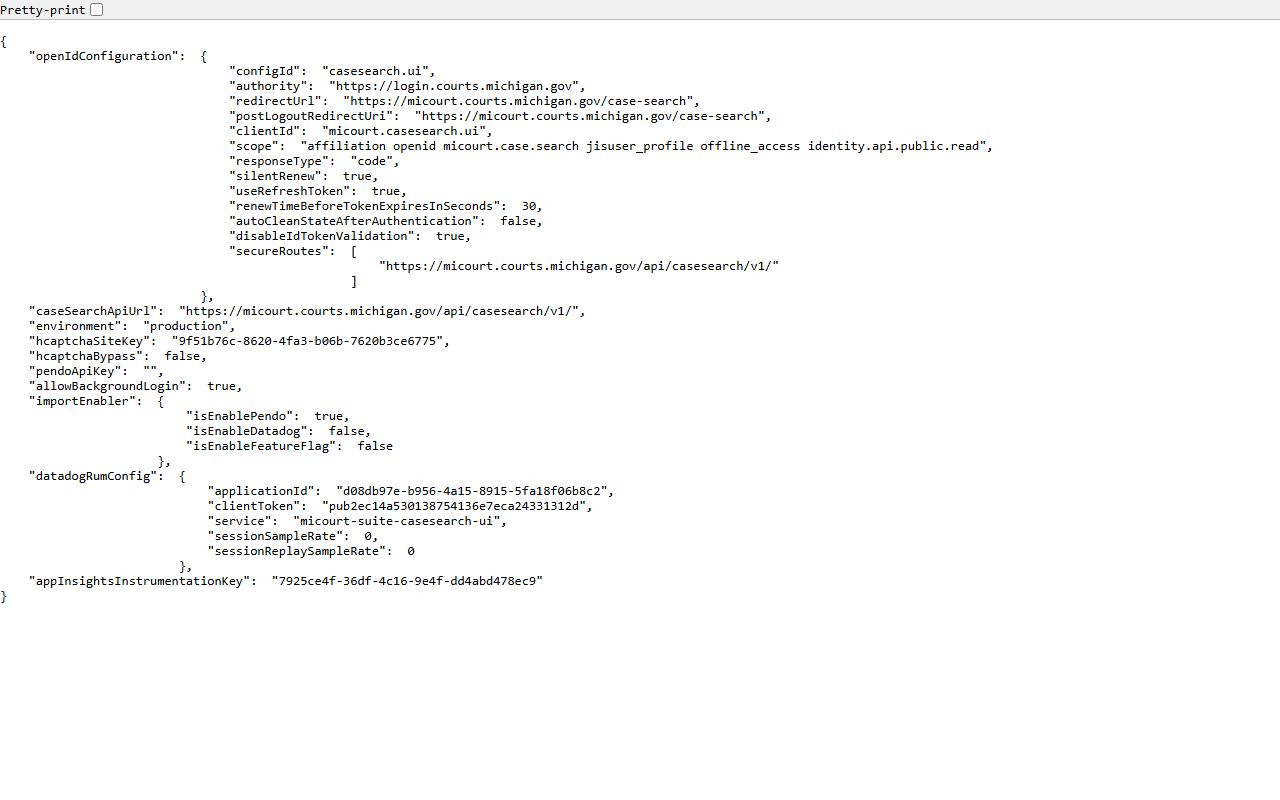
That configuration explains why a Probate matter may be searchable while an adoption file is hidden, and why each Isabella County court dockets view differs by code.
The Court Calendar and Upcoming Hearings
The case docket tells you the next hearing, and the court calendar shows what a courtroom will hear on a given day. The Isabella County Trial Court posts a calendar that visitors and attorneys use to plan a courthouse trip. It works alongside a case docket rather than replacing it, since a scheduled hearing on a docket is the same event that lands on the daily calendar.
The trial court's court calendar page is the local route for scheduling awareness.
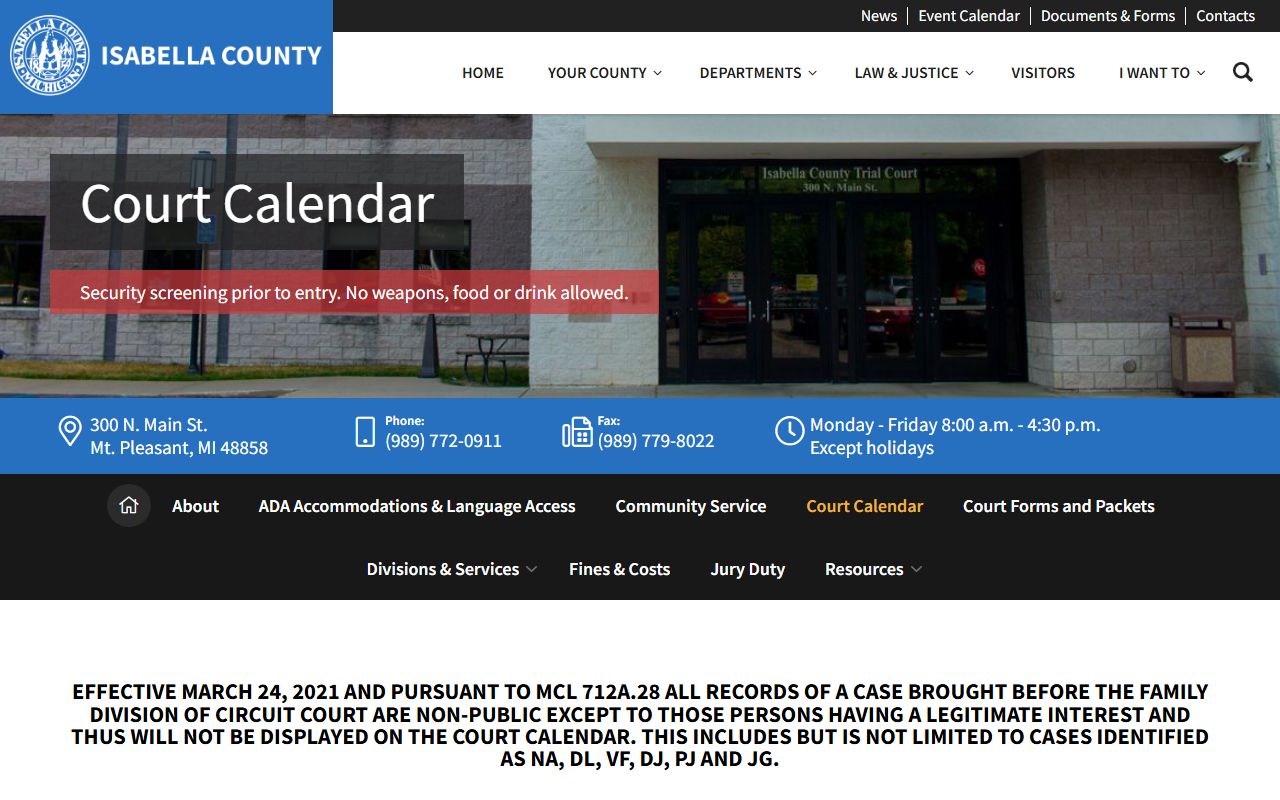
Attorneys, parties, and witnesses all lean on the calendar to time a courthouse visit. A criminal defendant confirms an arraignment slot, a civil litigant checks a motion hearing, and a probate petitioner verifies a review date. Because all three trial courts share one downtown complex, a single calendar helps a visitor plan around security screening and business hours.
Checking the calendar before a hearing saves a wasted trip, since the courthouse runs on business hours and screens every visitor at the door. Note: the calendar reflects scheduling as courts publish it, so confirm a hearing time with the clerk if a date looks unclear or recently changed.
Docket vs. Full Case Record
A docket and a full case record are not the same thing. The docket is the index of events, short and quick to scan. The full record holds the actual motions, exhibits, orders, and signed documents behind each entry. Most people only need the docket to track a case, but a lawyer or a party often needs the full file. The table sets the two side by side.
| Docket | Full Case Record | |
|---|---|---|
| Format | List of dated entries | Full documents and orders |
| Access | Often online through MiCOURT | May require a clerk request or a visit |
| Detail | Case status and hearing dates | Motions, exhibits, and rulings |
| Use | Track case progress | Legal review and evidence |
For a fuller look at what a case file holds and how to request missing documents, the Isabella County court records page covers the clerk and in-person channels in detail.
Restricted and Confidential Docket Entries
Not every docket reaches the public search. Juvenile cases carry statutory confidentiality, and Michigan law limits who may see them. Adoption files and mental-health hospitalization petitions in the Probate Court also stay closed. When a docket is restricted, the online search returns nothing, even though a case exists inside the court's own system.
Juvenile transfer and disclosure rules sit in the state's juvenile code, and MCL 712A.18l governs how those records may be shared.
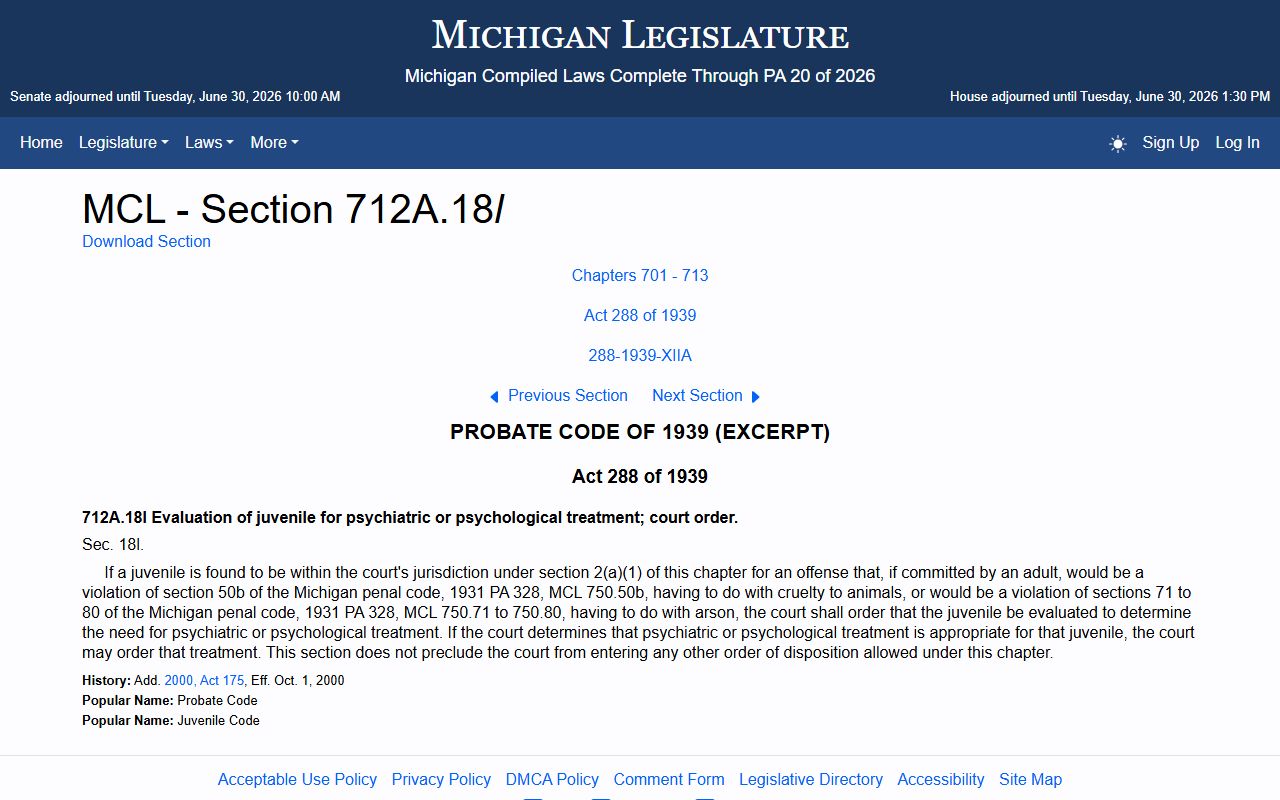
To view a restricted docket, a party or an attorney generally files a motion with the court that holds the case, or submits a formal request through the clerk who then applies the legal limits.
How to Read an Isabella County Docket
Docket status words can trip up a first-time reader. A case marked open or pending is still moving, while adjudicated or disposed means the court has ruled. Closed means the matter is finished. The party type tells you who is who, and the next hearing tells you when the case returns to court. Reading those fields together gives a clear snapshot without opening a single document.
The balance field, when shown, flags any fines or costs still owed on the case. A blank next-hearing field usually means no future date is set, which often points to a closed or disposed case. When the labels leave you unsure, the County Clerk can explain a status and confirm whether a hearing is still on the calendar.
Why is a case missing from the docket search? A few reasons explain a blank result. The case may be sealed or confidential, such as a juvenile or adoption matter. It may sit under a different court code than the one you picked. The name spelling may not match the court's entry. When any of these apply, the clerk's office is the direct fallback, since staff can confirm a case exists even when the public docket hides it.